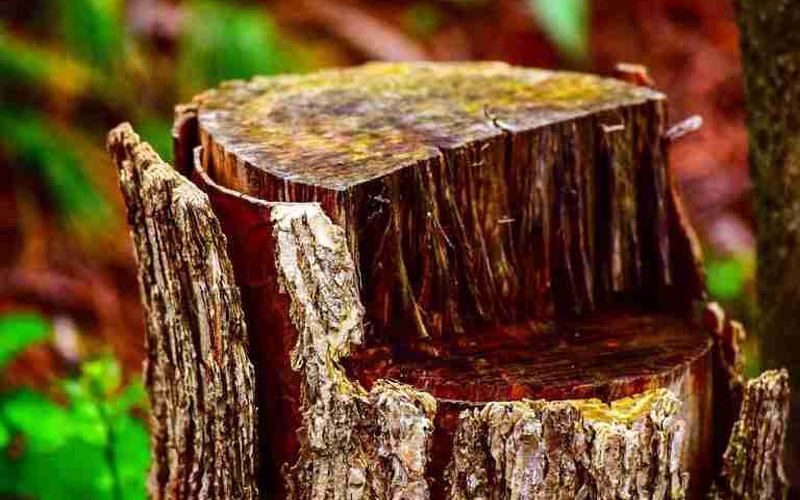
When a tree is removed, the stump left behind can be an unsightly and hazardous obstacle in your yard. While there are several ways to remove stumps, tree stump grinding is one of the lower-impact options. Not only does it get rid of the stump efficiently, but it also avoids some of the soil disturbance and chemicals that other removal methods involve. In this blog post, we’ll explore further why stump grinding is a good option for both your landscape and the environment.
Why It’s Important to Get Rid of a Tree Stump
- Tree stumps, especially if they’re hidden by grass or overgrown vegetation, pose a significant tripping hazard. This can be particularly dangerous for children playing in the yard, visitors unfamiliar with the area, or even when mowing the lawn.
- Tree stumps are magnets for pests, particularly termites, ants, beetles, and other wood-boring insects. These insects thrive in decaying wood, using it as a food source or nesting ground. While this might not seem like a major issue at first, these pests can quickly spread to nearby plants, trees, or even your home, causing damage.
- Some tree species can regenerate from a stump, sending up new shoots and saplings that sprout from the base. Over time, these shoots can grow into small trees, making your yard look unkempt and requiring constant trimming and maintenance.
- It detracts from the overall appearance of your landscape, making your property look unfinished or neglected. If you’re planning on selling your property, an unsightly stump could even lower the perceived value of your home.
- A tree stump can take up valuable space in your yard, limiting what you can do with the area.
- If the tree was removed due to disease, the stump can still harbour pathogens, fungi, or bacteria that can spread to other trees and plants in your yard. Over time, the decaying stump becomes a breeding ground for rot, which can impact the overall health of your garden.
- Even after a tree has been cut down, its roots can continue to grow, spreading and interfering with nearby structures, driveways, footpaths, or underground utilities. They can also draw water and nutrients away from other plants, affecting the health of your garden. Stump grinding won’t remove the roots entirely, but it does remove the stump itself, which makes the area easier to manage and reduces the chances of future issues.
- Mowing the lawn around a tree stump can be a hassle, especially if the roots or the base of the stump stick out above ground level. Not only do you risk damaging your lawnmower, but the stump also makes it difficult to keep the area looking neat and tidy.
Stump Grinding Reduces Environmental Impact
- Traditional methods of stump removal often involve digging up the entire stump and its roots, which can disturb the surrounding soil, plants, and ecosystems.
- Other methods may even require heavy machinery that can damage your yard and nearby plants.
- Stump grinding, on the other hand, focuses on grinding the stump down to the ground level, leaving the surrounding area intact. This minimal disturbance makes it a more environmentally friendly option than digging.
- Stump grinding doesn’t require harsh chemicals, unlike some removal methods that rely on chemical treatments to break down the wood over time.
- Choosing grinding avoids introducing potentially harmful substances into the soil, preserving the health of your garden and nearby vegetation.
You Can Turn Stumps into Mulch with Grinding
- One of the major advantages of stump grinding is the ability to repurpose the ground wood into mulch. Mulch helps retain soil moisture, prevents weed growth, and adds essential nutrients to the soil as it decomposes.
- By grinding your stump and converting it into mulch, you create a sustainable cycle that enhances your yard’s health and fertility.
- Instead of sending the stump to a landfill, where it would contribute to waste and carbon emissions, you’re recycling the wood and benefiting your garden. This simple step helps reduce your overall environmental footprint.
Protecting Wildlife and Local Ecosystems
- Digging up a stump can cause significant disruption to local wildlife and ecosystems, particularly those that rely on stable soil structures or specific habitats. Stump grinding, however, is a more targeted and precise method of removal.
- By limiting disruption to the soil and surrounding areas, it helps protect the environment and the animals that depend on it.
- Additionally, by avoiding chemical treatments, stump grinding ensures that you aren’t introducing harmful toxins into the soil that could negatively impact beneficial insects, birds, and other wildlife.
Stump Grinding, Safety and Soil Health
- Grinding quickly removes the stump without the heavy excavation that digging needs. It still cuts below ground level, so buried utility lines and irrigation systems should be located before the work starts. This reduces potential damage and keeps your yard safe without the need for extensive restoration work afterwards.
- Soil health is crucial to maintaining a thriving garden, and stump grinding is a good way to remove a stump while limiting disturbance to your soil. Unlike excavation methods that disrupt the soil structure, stump grinding leaves the root system in the ground. The roots naturally decay over time, adding organic matter to the soil.
- Because the soil is left largely undisturbed, the surrounding plants can usually carry on growing as before.
By choosing stump grinding over more invasive or chemical-based methods, you’re choosing a lower-impact option that is kinder to both your landscape and the environment.
Contact Tree Problem No Problem today to talk about stump grinding for your yard.