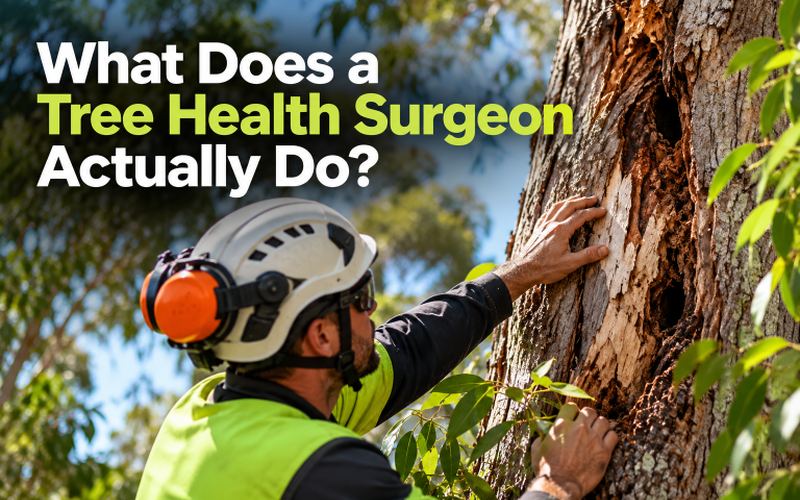
Tree health surgeons (often called arborists, but with a stronger focus on diagnosis and treatment) do a lot more than just cut branches or remove trees. Their main job is to work out what’s going wrong with a tree, why it’s happening, and whether it can be saved.
In simple terms, they’re part tree detective, part tree doctor.
Diagnosing What’s Actually Wrong
The first step is always inspection. This is where a tree health surgeon looks for visible warning signs like:
- Yellowing or thinning leaves
- Dead or dying branches
- Fungal growth on the trunk or roots
- Insect damage or boring holes
- Leaning or unstable structure
But the real issues often aren’t obvious from the outside.
A proper assessment also looks at soil health, drainage, root stability, nearby construction damage, and even stress from weather or drought. Two trees can look the same on the surface but have completely different underlying problems.
Figuring Out Why It’s Happening
Once the symptoms are identified, the next step is understanding the cause. This is where experience matters.
For example:
- A tree dropping leaves might be overwatered, not underwatered
- A leaning tree might have root damage rather than wind exposure
- Fungal growth might be a sign of long-term internal decay, not a surface issue
A tree health surgeon connects the dots between symptoms and causes instead of just reacting to what’s visible.
Treatment (Not Just Removal)
If a tree can be saved, a treatment plan is created. This can include:
- Targeted pruning to remove diseased or dangerous limbs
- Soil improvement and fertilisation to restore nutrients
- Pest and disease control treatments
- Structural support like bracing or cabling
- Managing surrounding conditions like drainage or compaction
The goal is always to stabilise and improve the tree rather than remove it unnecessarily.
Removal Only When It’s Truly Needed
Tree removal isn’t the default option. It’s usually the last resort.
A tree health surgeon will only recommend removal when:
- The tree is structurally unsafe
- Disease has progressed too far to treat
- There is a real risk to people or property
Regular check-ups can catch issues early, before they become serious. This might mean spotting early root decay, identifying pest activity before it spreads, or adjusting care routines to suit seasonal conditions.
In places like Brisbane and South East Queensland, where storms, heat, and humidity all impact tree health, preventative care can make a huge difference to how long trees survive.
Why It Actually Matters
Healthy trees aren’t just about appearance. They affect safety, property value, shade, and the overall environment of a home or site. A failing tree can become a serious hazard long before most people realise there’s a problem.
That’s why tree health surgeons focus on early intervention rather than emergency response.