When it comes to tree care, watering might seem simple, but doing it right can make the difference between a healthy, thriving tree and one that struggles to grow. Whether you’ve recently planted a new tree or are trying to keep an established one in good shape through the dry months, understanding when, where, and how much to water is key. Here’s what you need to know to give your tree the best chance at long-term health.
1. Water Trees Deep, Not Just Often
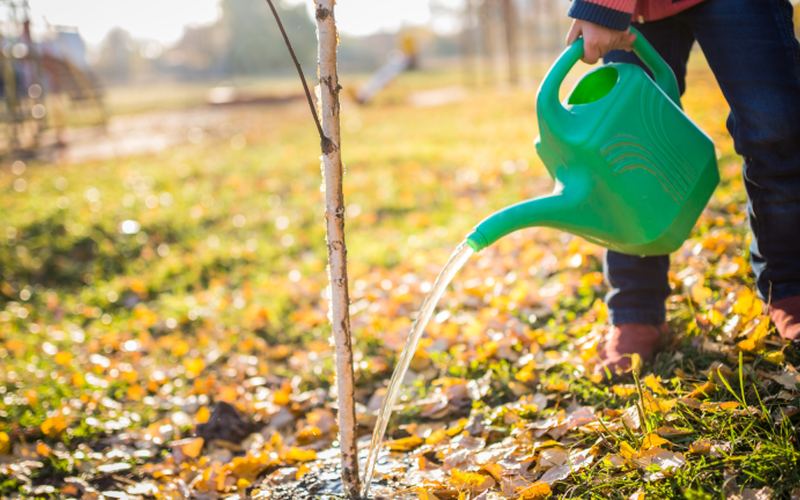
Trees don’t want a light sprinkle, they want deep, thorough watering that reaches their roots. Shallow watering encourages surface roots, which are less stable and more vulnerable to heat and drought.
For young trees, aim to water so the moisture reaches about 30cm deep. For mature trees, up to 60cm deep is ideal. You can test this with a soil probe or even a screwdriver—if it doesn’t go in easily, your soil is likely dry.
2. Where to Water Trees
The biggest mistake people make is watering near the trunk. A tree’s absorbing roots are actually located away from the base, near the drip line—the area beneath the outer edge of the canopy.
Watering around this outer zone ensures the moisture goes where the roots can actually take it in. Think of it like watering the ends of a plant’s roots, not the stem.
3. How Often to Water Trees
- Newly planted trees: 2–4 times a week for the first few months, then weekly for the first year
- Established trees: Every 2–4 weeks during dry periods
- Sandy soils: Drain faster, so water more often
- Clay soils: Hold water longer, so water less often
Early morning or late afternoon is the best time to water as this reduces evaporation and allows the tree to absorb more before the heat of the day.
4. Mulch Helps Moisture Last
Applying a layer of mulch around the base of the tree (but not touching the trunk) helps lock in moisture, keeps roots cool, and reduces weed competition. Use organic mulch like bark chips or compost and aim for about 5–10cm thick.
5. Watch for Signs of Overwatering or Underwatering Trees
Yellowing leaves, stunted growth, or root rot could be a sign of overwatering, especially in compact soils. On the other hand, dry, crispy leaves, premature leaf drop, or slow growth often point to underwatering.
Getting it just right can take some adjustment, especially in the changing seasons.
Not Sure What Your Tree Needs?
If your trees are struggling or you’re not sure how to care for them properly, you don’t have to figure it out alone. At Tree Problem No Problem, we offer expert advice, professional tree assessments, and tree care services across the Redlands region.
Whether it’s dry weather, pest damage, or poor soil holding your tree back, we can take a look and advise you on the next step.
Contact Tree Problem No Problem today for help getting your trees to thrive.