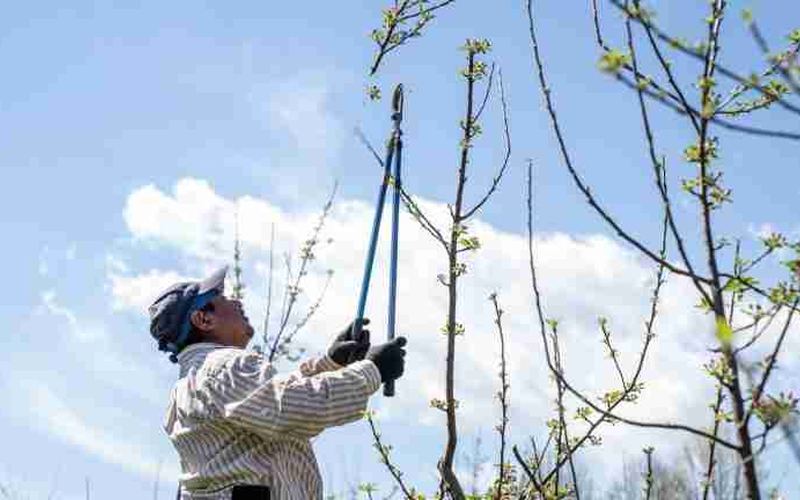
Pruning is essential for maintaining a tree’s health, structure, and aesthetics. However, improper pruning can cause severe damage, leading to weak growth, disease susceptibility, or even tree death. Read our blog post on what NOT to do when pruning a tree.
1. Over-Pruning
The Mistake: Removing too much foliage at once.
Why It’s Harmful: Trees rely on their leaves for photosynthesis, which provides them with the energy to grow. Excessive pruning can weaken the tree, making it more susceptible to pests, disease, and environmental stress.
Best Practice: Never remove more than 25% of the tree’s canopy in one pruning session.
2. Topping the Tree
The Mistake: Cutting off the top of the tree or large sections of the crown.
Why It’s Harmful: This practice results in weak, spindly growth and leaves the tree vulnerable to sun damage, disease, and decay. Topping also disrupts the tree’s natural structure, leading to long-term instability.
Best Practice: Instead of topping, use selective thinning or crown reduction techniques to maintain size and shape.
3. Using Dull or Dirty Tools
The Mistake: Cutting branches with blunt or unclean tools.
Why It’s Harmful: Dull tools create jagged cuts that take longer to heal, while dirty tools can spread diseases between trees.
Best Practice: Always use sharp, clean pruning shears or saws, and sterilise them between trees to prevent cross-contamination.
4. Making Improper Cuts
The Mistake: Cutting too close or too far from the branch collar.
Why It’s Harmful: Cutting too close removes the tree’s natural healing tissue, while cutting too far leaves a stub that won’t heal properly, attracting pests and disease.
Best Practice: Make clean cuts just outside the branch collar (the swollen area where the branch meets the trunk).
5. Pruning at the Wrong Time of Year
The Mistake: Cutting branches during peak growing or dormancy periods.
Why It’s Harmful: Pruning during the wrong season can stress the tree, encourage weak growth, or increase the risk of disease.
Best Practice: Prune most trees during late winter or early spring before new growth begins. Avoid pruning in extreme heat or during wet seasons when fungal infections thrive.
6. Ignoring Structural Weaknesses
The Mistake: Removing only smaller, accessible branches while ignoring major structural issues.
Why It’s Harmful: Poor branch structure can lead to breakage, property damage, and safety hazards.
Best Practice: Focus on removing weak, crossing, or poorly attached branches to encourage strong, stable growth.
7. Neglecting Aftercare
The Mistake: Pruning and then leaving the tree to fend for itself.
Why It’s Harmful: Fresh cuts are vulnerable to disease and pests. Without proper aftercare, trees can struggle to recover.
Best Practice: After pruning, monitor the tree for signs of stress, water it adequately, and mulch around the base (but not against the trunk) to retain moisture and nutrients.
Pruning is an important part of tree care, but it needs to be done correctly to support the tree’s long-term health and stability. Avoid these common mistakes and, when in doubt, seek advice from a professional arborist to ensure your tree remains strong and beautiful for years to come.
Need expert tree pruning services in the Redlands? Contact Tree Problem No Problem for professional tree care and maintenance!